Galerie Hubert Winter
Kandis Williams, ZOMBIE (Sketch) Plantation Fantasies and Suburban Body Snatchers and the Power to Steal the Will of Others (2024)
Paper, collage, color aid and adhesive on paper, 24 x 18 in
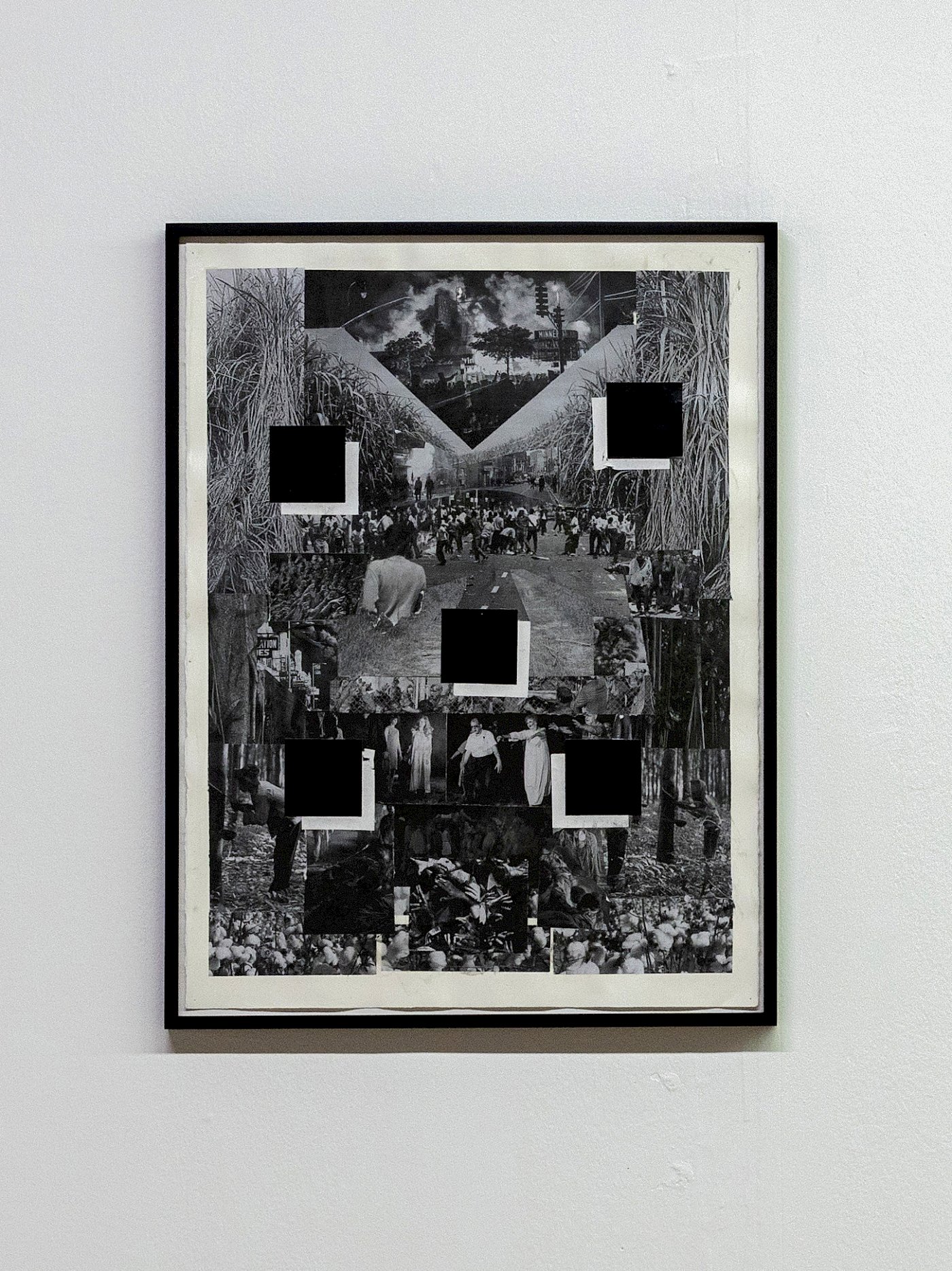
<p class="caption">Full title:</p>
<p>ZOMBIE (Sketch) Plantation Fantasies and Suburban Body Snatchers and the Power to Steal the Will of Others You're working on a new film now, about a Harvard graduate student who goes down to Haiti and uncovers what he thinks is the biological secret behind zombies. Um, so you were shooting on location in Haiti. And I don't, can't think of many films that have been shot there. There's been a lot of political upheaval there lately. Did that affect the making of the film at all? Wade Davis was a Harvard ethnobotanist, and he was commissioned by a large pharmaceutical company in a rather secret expedition to go to Haiti and find the botanical reason behind the creation of zombies. I personally met one, a 17-year-old zombie, quote, unquote, by the name of Rosemary. What they are, as it turned out after extensive research, is people that have been poisoned by a very subtle, very powerful neurotoxin that gives them all appearances of death. Their heartbeat, their respiration, and all other vital signs go down to the point where they cannot be determined by a typical rural doctor. The person is buried, and in the middle of the night is still alive, still fully conscious, although showing no signs of life, is dug back up, further poisoned, beaten, and quite often sold into slavery in Haiti for their work in the cane fields. All part of a tribal system of judgment. It's their form of capital punishment within voodoo. So, rather than thinking of zombies, think of somebody who's been poisoned by a neurotoxin and appeared to be dead, but was not, and has died, then returned to the living as a brain-damaged person with all of their volitional centers destroyed. That is what a zombie truly is. And this movie is about that actual factual process. The process existed for centuries and then was distorted by Duvalier, Papadoc Duvalier, and used as a tool of political oppression. If you spoke out too harshly against his government, you would be dragged from your house in the middle of the night and made into a zombie. Some of the most beautiful and gracious people I've ever met, taken individually, they're wonderful, marvelous people. Within a group of more than six or eight, they can very quickly develop a sense of outrage and wanting to tear the house down because they've been oppressed so severely and most recently released from this. So, when we were dealing with large crowds and we had some scenes dealing with 4,000 people, we ended up in very dangerous situations. We ended up once having to evacuate our crew into a missionary compound in a small village far removed from any help. Were you perceived as the exploiter, as the filmmaker there? Not at first. I mean, we went in with all attempts to say we are bringing work and jobs and everything else. The people have been deprived for so long that any show of money whatsoever becomes what they perceive as the beginning of the gold mine opening up. We're hoping to open it next January on Martin Luther King's birthday (Wes Craven and Terry Gross, 1987).</p>